
Design study · Sustainable energy
Store summer heat. Use it in winter.
A district heating concept for the Le Plessis eco-hamlet, combining solar thermal energy, borehole thermal energy storage (BTES) and a geothermal heat pump.
Study project developed with Maya Doubia · Fluid systems option
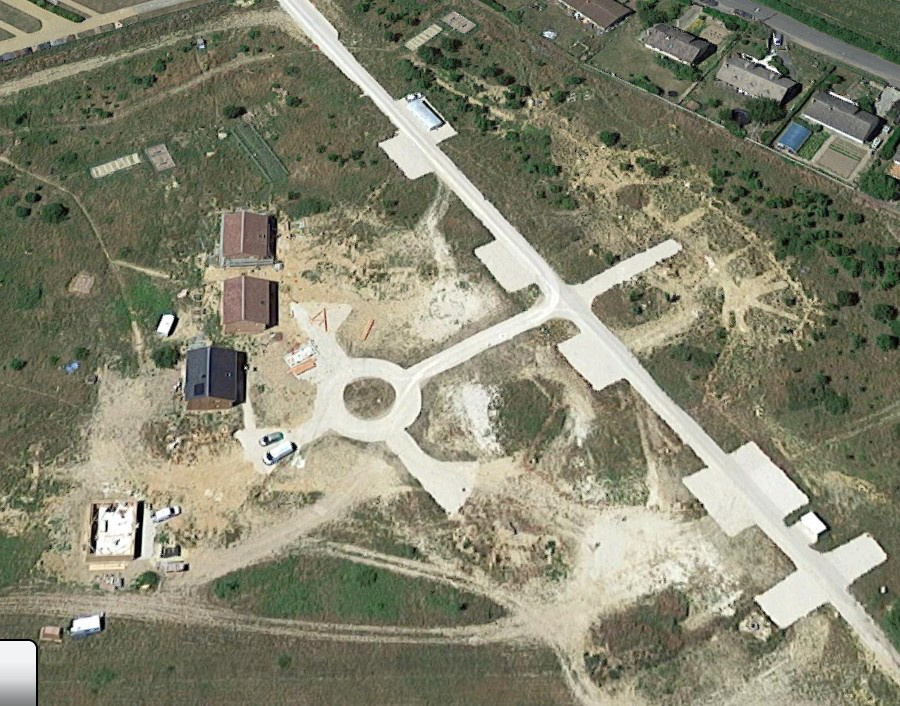
Core idea
Make solar heat useful beyond the day it is collected
The study explores a collective heating solution inspired in part by the Drake Landing Solar Community in Canada. During summer, excess heat from solar thermal collectors is injected into a field of geothermal boreholes. The ground acts as seasonal thermal storage, intended to support space heating during colder months.
In the proposed scenario, BTES complements geothermal heat pumps. Each building retains a solar-combi storage tank and a low-temperature heating system, making the best possible use of locally available heat.
Energy system
Three complementary building blocks
A design connecting local heat production, seasonal storage and shared distribution.
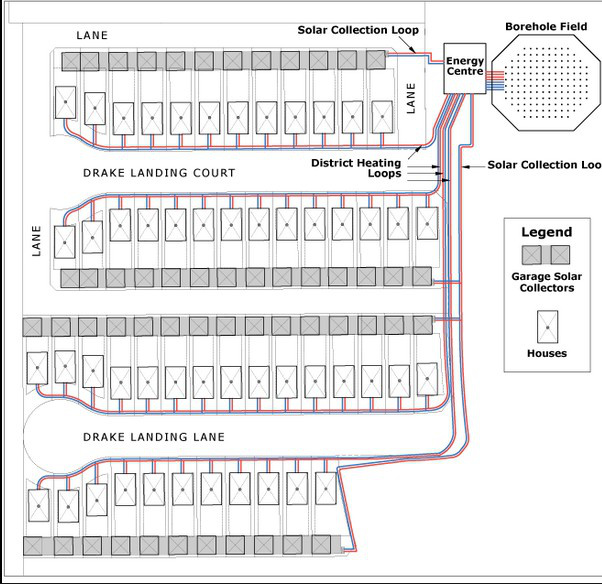
The BTES concept
Excess summer solar heat is injected into a field of buried boreholes and recovered during the heating season.
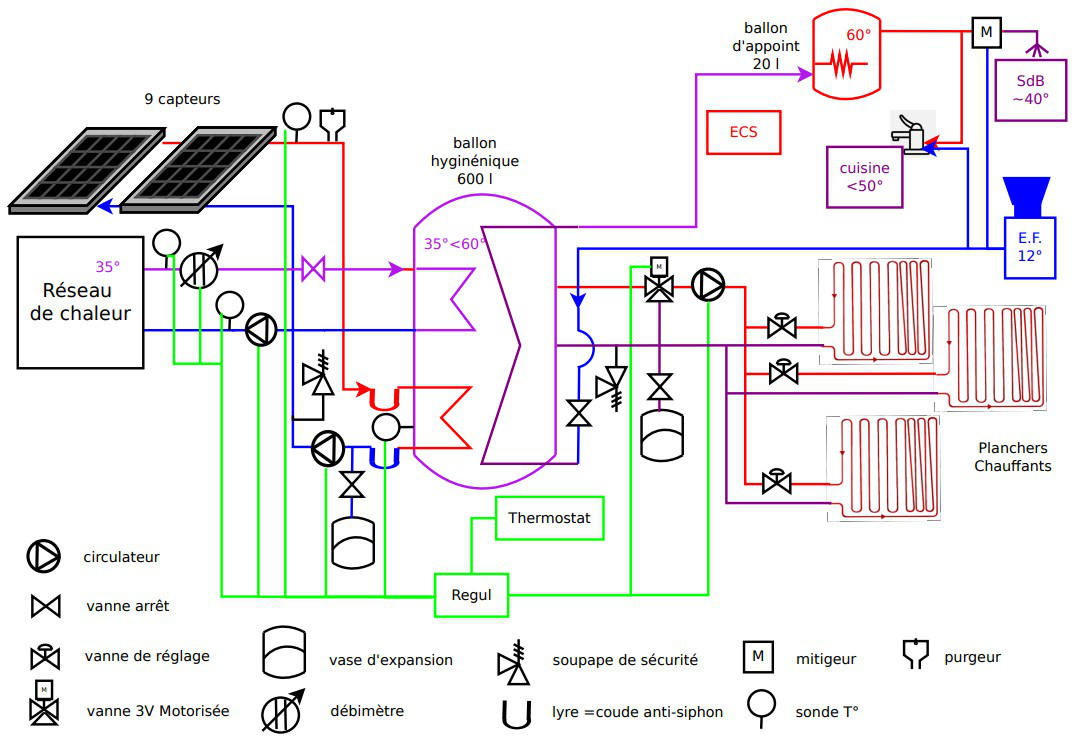
Hybrid heat production
Each building has a thermal storage tank supplied by solar thermal collectors and, when needed, by the district heating network.
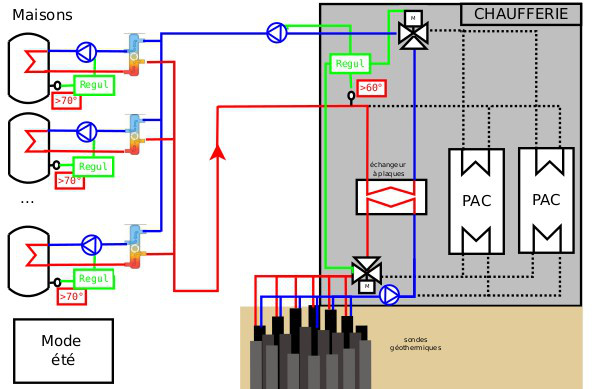
A hamlet-scale network
A central plant and several distribution loops serve the homes and the shared community building.
Seasonal cycle
From summer surplus to winter support
Spring and summer
Solar collectors cover immediate needs and charge the tanks. Once the tanks are sufficiently hot, surplus heat is redirected underground.
Stored in the ground
A field of vertical boreholes stores part of the heat in the surrounding ground. Actual performance depends on soil properties and thermal losses.
During the heating season
The borehole field acts as a heat source for the heat pump. The district network then supplies the buildings’ storage tanks.
Preliminary sizing
From individual buildings to the district network
The report covers heat-loss estimates, ventilation, domestic hot-water demand, storage tanks and collector sizing, peak power demand and the district heating loops.
The figures shown are assumptions and estimates from the study, not measured performance from a completed installation. The report also identifies topics requiring further calculations, including pressure losses and detailed equipment sizing.
Read the full study
Explore the technical report
The complete document includes assumptions, hydraulic diagrams, sizing calculations and further ideas around BTES and ground cooling.